Stock Up for Your Studio
Explore Rose Younai’s curated nail gels, art powders, tools, and salon essentials — available for retail and wholesale orders.

Gel polish allergens are not a niche salon drama; they are a chemistry, labeling, and curing problem hiding in plain sight. This guide explains HEMA, HPMA, Di-HEMA, methacrylate allergy, and how serious buyers should judge gel products before skin pays the invoice.
I once watched a tech wipe uncured gel off a client’s sidewall with her bare thumbnail, keep talking, cure the hand, then blame the client’s “sensitive skin” when redness showed up later.
Classic salon theater.
And yes, that sounds harsh, but I frankly believe the gel polish allergens conversation has been made too cute, too brand-safe, too wrapped in pastel claims like “gentle formula” and “HEMA free gel polish” while the real variables — monomer load, sloppy flood control, lamp mismatch, inhibition layer transfer, dust exposure, and half-baked cure discipline — get shoved behind shade names.
Here’s the ugly truth: gel polish isn’t normal polish. It doesn’t “dry.” It polymerises. Until that polymer network is properly formed, the product is still chemically active in ways buyers don’t always understand.
So when someone asks, “What is HEMA in gel polish?” I don’t hear a beginner question. I hear a buyer standing at the edge of a chemistry pit.
HEMA, or 2-hydroxyethyl methacrylate, is a small methacrylate monomer. In gel systems, it helps adhesion. It helps the product grip the nail plate. It gives formulators that sticky, reliable bonding behavior that makes a manicure survive dishes, keyboards, glove sweat, and bad client habits.
That’s the good part.
The bad part? HEMA is also one of the names dermatologists keep seeing in gel nail allergy conversations. The European Commission’s Scientific Committee on Consumer Safety said HEMA and Di-HEMA TMHDC are not likely to create sensitisation risk when they’re used properly on the nail plate, cured correctly, and kept off surrounding skin — but the same opinion also flags misuse, skin contamination, filing dust, and routine professional exposure as real concerns. European SCCS opinion on HEMA and Di-HEMA
Tiny detail. Huge consequences.
Buyers usually look at color first. Wrong instinct. If you’re comparing a functional nail art gel for strong hold against a softer dewy glow sheer nude nail gel, the pretty finish is only the surface story. The deeper question is whether the formula, lamp, layer thickness, and user skill actually match.
I know. Boring.
But boring is cheaper than a lifelong methacrylate allergy.
But HEMA gets too much of the blame, almost like the industry needed one villain so everyone could stop reading ingredient lists.
HPMA — 2-hydroxypropyl methacrylate — sits in the same broader methacrylate conversation. It may appear in gel and acrylic nail systems for adhesion and resin performance. A market survey of methacrylate-based nail cosmetics reported HEMA as the most frequently identified component across hundreds of reviewed products, with other methacrylates, including HPMA, also appearing in the ingredient-label picture. Online market survey of HEMA and other methacrylates in nail cosmetics
And this is where buyers get played.
A brand removes HEMA. The front label screams HEMA free gel polish. The shopper relaxes. Meanwhile, the back-end chemistry can still include HPMA, IBOA, TEGDMA, EGDMA, urethane acrylates, or other acrylates in gel polish that are still reactive until cured.
Nice trick, right?
From my experience, the smarter buyer doesn’t ask, “Is it HEMA-free?” and stop there. They ask: “What replaced the HEMA, what’s the full INCI, does the brand publish cure requirements, and has this exact shade been tested under the lamp they recommend?”
Less sexy. More adult.
Di-HEMA TMHDC has that “bigger molecule, more advanced formula” aura. Brands lean on that. Sometimes subtly. Sometimes not.
Fine, the molecule is different from HEMA. It often shows up in durable gel systems because it can support strength, viscosity, wear, and that glossy hard-shell finish buyers love. But if you treat “different” as “risk-free,” you’re doing cosmetic chemistry by vibes.
That’s dangerous.
EU Regulation 2020/1682 moved HEMA and Di-HEMA TMHDC into a professional-use-only warning framework for nail products, with required warnings including “for professional use only” and “can cause an allergic reaction.” Commission Regulation EU 2020/1682
There’s your clue.
The regulator didn’t say, “Everyone panic.” It also didn’t say, “Slap a green sticker on it and sell it to beginners with a mini lamp.” It drew a line around precision, training, skin avoidance, and professional handling.
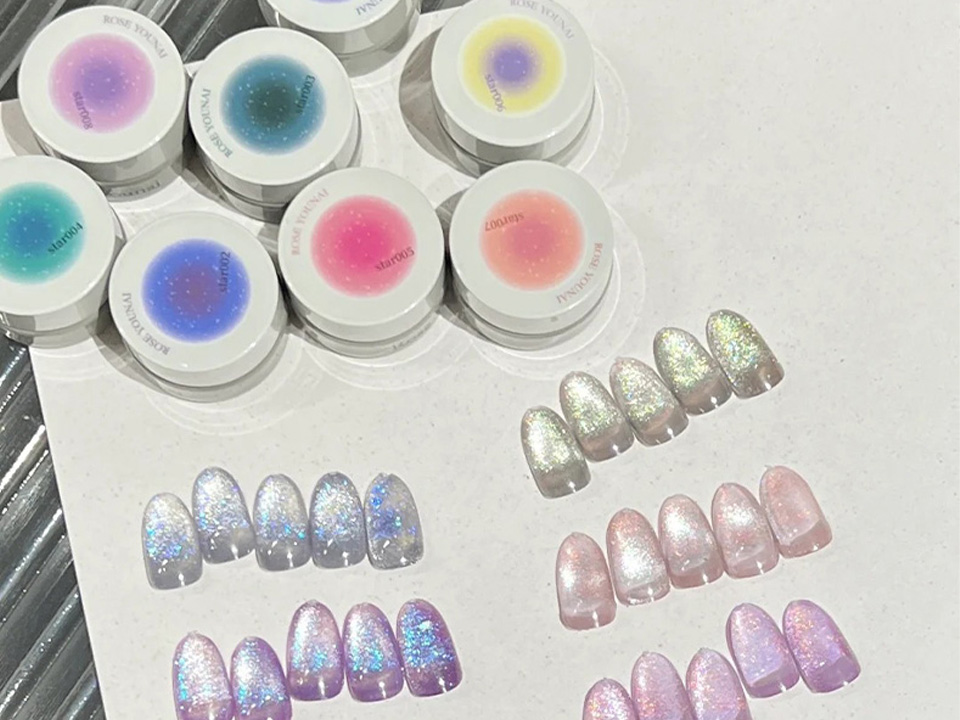
This matters even more with loaded effect gels. A wine red magnetic cat eye gel set or a milky glass cat eye gel may look simple on Instagram, but dense pigment, magnetic particles, glitter, jelly opacity, and thick application can all mess with cure depth if the system isn’t respected.
One thick coat? Bad habit.
Ever seen a client pull out a random $12 lamp and say, “It works with everything”?
Nope.
The lamp isn’t an accessory. It’s part of the chemical system. Wrong wavelength, weak diode output, old bulbs, dirty reflectors, overloaded thumbs, or a lazy flash cure can leave product looking hard while still holding mobile reactive material underneath. That sticky inhibition layer people wipe like it’s harmless residue? Treat it with respect.
The FDA’s nail care guidance says cosmetic nail products generally don’t need FDA approval before going to market, except most color additives, and it warns that infections and allergic reactions can happen with some nail products. It also notes that traces of methacrylate monomers may trigger redness, swelling, and pain in people sensitised to methacrylates. FDA nail care products guidance
So when a product page gives you “cure 60 seconds” with no lamp wavelength, no layer-thickness instruction, no professional-use language, and no SDS access, I see a red flag.
A shiny one.
| Allergen / Ingredient | Common Role in Gel Systems | Buyer Risk Signal | Smarter Buying Question |
|---|---|---|---|
| HEMA, 2-hydroxyethyl methacrylate, CAS 868-77-9, formula C6H10O3 | Adhesion, flexibility, bonding | Small monomer; well-known in gel nail allergy discussions | Is it present, at what level, and is this professional-use only? |
| HPMA, 2-hydroxypropyl methacrylate, formula C7H12O3 | Adhesion and resin performance | Often overlooked when buyers focus only on HEMA free gel polish | If HEMA is absent, what methacrylates replaced it? |
| Di-HEMA TMHDC, CAS 41137-60-4 / 72869-86-4 | Gel strength, durability, viscosity control | Larger molecule, but still listed in EU professional-use restrictions | Does the label carry professional-use and allergy-warning language? |
| Other acrylates and methacrylates | Structure, cure speed, toughness, shine | Cross-reactivity and sensitisation can make “free-from” claims misleading | Can the brand provide full INCI and SDS documentation? |
| Pigments, glitters, magnetic particles | Color and effects | Dense shades may need exact curing discipline | Has this specific shade been cure-tested, not just the base formula? |
Here’s where I’ll annoy both buyers and brands: HEMA-free gel polish can be useful, but it’s become one of the laziest safety shortcuts in nail retail.
It helps. Sometimes.
If a buyer has a known reaction to HEMA, avoiding HEMA makes sense. But “HEMA-free” doesn’t tell you whether the gel contains HPMA, Di-HEMA, urethane acrylates, isobornyl acrylate, or some other methacrylate system that can still be a problem for sensitised users. It doesn’t tell you cure completeness. It doesn’t tell you whether the product was tested in the lamp sitting on your table.
That’s the part people skip.
Look at specialty gels: micro glitter sparkle nails, opalescent jelly nail gel polish, and vintage amber cat eye magnetic gel polish all live in the fun zone — shimmer, dimension, movement, payoff. But with fun formulas, you still have boring responsibilities: thin coats, clean margins, full cure, no skin flooding, careful removal, dust control.
Yes, even for glitter.
Especially for glitter.
I don’t blame consumers for wanting salon nails at home. Prices went up. Schedules got weird. Short videos made builder gel look like frosting a cupcake.
But chemistry didn’t simplify itself for TikTok.
A 2024 survey in Dermatitis looked at people reporting skin reactions linked to acrylic nail cosmetics and found that 78% reported using home acrylic kits, 68% learned about kits through social media, 74% trained themselves through websites or videos, and 83% of home users first developed skin reactions after starting home kits. Survey of skin reactions associated with acrylic nail cosmetics and home kits
That is not a tiny warning bell. That’s a fire alarm with rhinestones on it.
Salon techs can mess up too — don’t misunderstand me — but trained professionals usually know why sidewall flooding matters, why over-buffing opens trouble, why dust extraction isn’t optional, why nitrile beats bare fingers, why thumbs need special cure positioning, and why dark colors aren’t the place for sloppy thickness.
A beginner with a cheap lamp, uncured gel on the cuticle, and a “don’t worry, I saw a hack” mindset? That’s exposure roulette.
I’d sort products into three piles before I even cared about shade.
First pile: full disclosure. Complete ingredient list, sane warnings, cure instructions, lamp compatibility, batch traceability, professional-use clarity where needed, and no childish “non-toxic miracle” wording.
Second pile: partial disclosure. Pretty page, some ingredients, lots of lifestyle copy, maybe decent product, maybe not.
Third pile: mystery meat.
Straight to trash.
If I’m buying a soft neutral, fine — I’ll still check the system. If I’m buying a builder, magnetic gel, dense glitter, or high-pigment black-red shade, I’m more suspicious because cure depth can get tricky. That doesn’t make the product bad. It means the buyer has to stop acting like all gels are interchangeable.
And if someone already has a methacrylate allergy? I wouldn’t “just try one nail.” I’d get medical guidance and stop gambling with acrylates in gel polish.
Unpopular opinion: the best gel polish for allergies may be no gel polish at all for some people.
HEMA in gel polish is 2-hydroxyethyl methacrylate, a reactive adhesion monomer that helps UV/LED gel bond to the nail plate, but it can become a gel polish allergen risk when uncured product touches skin repeatedly, cures poorly, or is used without professional-level application discipline.
That’s the clean definition. The messy reality is that HEMA works well, which is exactly why brands use it. The risk isn’t just the ingredient sitting in a bottle; it’s the ingredient sitting uncured on living skin.
HEMA-free gel polish is gel polish formulated without HEMA, but it is not automatically allergy-safe because other methacrylates, including HPMA, Di-HEMA, urethane acrylates, and related acrylates, may still trigger reactions in people already sensitised to gel polish allergens.
I’d treat “HEMA-free” like one checkbox, not a safety certificate. Useful? Yes. Complete? Not even close. If you’ve had a gel nail allergy before, ask a dermatologist about patch testing instead of turning your fingers into the test panel.
HPMA in gel polish is 2-hydroxypropyl methacrylate, another methacrylate ingredient used in some gel nail systems for adhesion and resin performance, and it belongs in the same buyer-risk conversation as HEMA, Di-HEMA, and other acrylates in gel polish.
HPMA is the ingredient people forget because HEMA gets the headlines. Bad shortcut. If HEMA disappears from a formula, something else often carries the adhesion job, and that replacement deserves scrutiny.
Di-HEMA TMHDC is a larger methacrylate used in some gel systems for strength, wear, and structure, but buyers should not assume it is risk-free because EU rules still place HEMA and Di-HEMA TMHDC under professional-use and allergy-warning requirements for nail products.
That’s my issue with the “advanced molecule” pitch. Bigger doesn’t mean harmless. Different doesn’t mean safe for careless use. It still needs proper cure, clean application, skin avoidance, and realistic label warnings.
The best gel polish for allergies is a transparent, properly cured, low-risk system chosen after checking the complete ingredient list, methacrylate content, lamp compatibility, user skill level, and personal allergy history rather than relying only on claims like HEMA-free or hypoallergenic.
Frankly, the “best” product may depend on whether the buyer is a trained tech, a careful home user, or someone already sensitised. Those are not the same person. They shouldn’t buy the same way.
I’ll put it bluntly: gel polish allergens don’t care about branding.
HEMA free gel polish may help. HPMA gel polish may still be a problem. Di-HEMA gel polish can perform beautifully and still demand professional handling. Methacrylate allergy is not a vibe, not a trend, not a comment-section debate.
Buy the shimmer. Buy the cat eye. Buy the milky nude.
But buy the paperwork first.