Stock Up for Your Studio
Explore Rose Younai’s curated nail gels, art powders, tools, and salon essentials — available for retail and wholesale orders.

Glitter negotiation is not a product packaging problem; it is normally a formulation and process-control failing. This guide describes how bulk gel makers can suspend shine reliably without turning the gel into pointless paste.
And when it sinks inside a 20 kg pail, nobody in the sales meeting wants to find out about “visual results,” “settling tolerance,” or “small phase separation”; they wish to know why the initial 2 kg resemble normal gel and the last 2 kg look like a nightclub flooring.
Below is the difficult reality: shine negotiation in bulk gel production is seldom triggered by “negative shine” alone. It is normally the outcome of a weak gel network, lazy thickness matching, bad blending order, overheated sets, brash QC, or a purchasing group that silently swapped a fragment quality due to the fact that the quote looked far better. What could fail?
Shine clears up due to the fact that gravity defeats your gel structure.
That appears also basic, but the whole failure rests inside that sentence. In shine suspension gel formulation, put on hold fragments require either a high adequate continuous-phase viscosity, a measurable yield tension, or a thixotropic network that reconstructs after blending and loading. If the gel streams like syrup at rest, glitter will certainly travel. Slowly, possibly. Yet it will travel.
Rheology matters greater than prettiness. A 2023 review on gel rheology defines return tension as a specifying actions in lots of gels and yielding fluids: listed below a particular stress, the product behaves more like a soft strong than a streaming liquid. That is the maker’s close friend when trying to prevent radiance settling in gel.
The error I see in weak solutions is this: teams go after high Brookfield thickness at one spindle rate and overlook recovery after shear. Nice number. Negative gel. A shine nail gel can look thick in a cup and still fail after pumping, filling, shipping vibration, or three hot days in a warehouse.
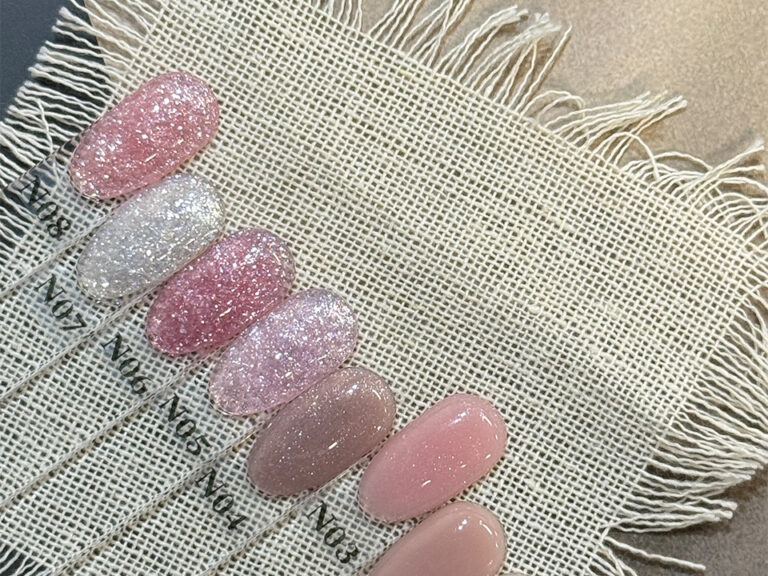
If your brand name deals with high-sparkle SKUs like mini radiance sparkle nail gel establishes or star radiance nail gel, you are not selling color alone. You are offering particle distribution.
Packaging gets charged due to the fact that it shows up.
Yet radiance settlement normally starts upstream, prior to the jar, bottle, or pot ever before sees item. The bulk mass is currently unpredictable; the container just shows the crime scene.
The core diagnostic inquiry is not “Just how thick is it?” It is “Does the gel reconstruct fast enough after shear to hold particles in place?” A steady glitter gel requires regulated circulation during mixing and loading, after that sufficient inner framework at remainder to incapacitate mica, artificial fluorphlogopite, calcium light weight aluminum borosilicate, pet dog shine, aluminum-coated flakes, or larger reflective particles.
The EU’s 2023 microplastics restriction likewise altered the method accountable manufacturers need to think about glitter systems, particularly artificial polymer microparticles and loose plastic shine. The regulation started applying on October 17, 2023, and the European Commission mounted it as component of a more comprehensive action versus purposefully included microplastics.
So, no, glitter is not simply design any longer. It is regulative exposure, sustainability positioning, particle engineering, and stability scientific research packed into one shiny headache.
A thickener provides body. A maintaining network offers suspension.
That difference saves sets.
For cosmetic gel stabilizer systems, formulators typically lean on acrylates copolymers, carbomer-type polymers, polyurethane rheology modifiers, organoclays in non-aqueous systems, cellulose by-products, silica, xanthan-style periodontals, or hybrid polymer networks. In UV/LED nail gel, the choice is narrower since the stabilizer should play nicely with oligomers, monomers, pigments, photoinitiators, cure depth, quality, oxygen restraint, and final wear.
Here is the undesirable point of view: if your shine gel requires to be drunk prior to use, your formula is not costs. Shake-before-use is tolerable for some consumer paints and craft liquids. For professional gel gloss? It signals weak suspension design.
For larger bits, I would rather tune yield value than just press viscosity up. Why? Due to the fact that high viscosity can make filling up awful, brush pickup stringy, self-leveling inadequate, and cure consistency unequal. A smart gel moves under brush pressure, after that rebuilds when laid off.
That is why a strong-hold base like useful nail art gel for solid hold belongs in the same technical conversation as shine stability. Hold is not just regarding attachment; it is additionally concerning structure.
Huge radiance looks costly. It also settles much faster.
Flat flakes act differently from round fragments. Aluminum-coated animal acts differently from mica. Borosilicate glass flakes act in a different way from synthetic mica. Fine glimmer may put on hold magnificently, while hex glitter goes down like wet confetti in the very same base.
Use a fragment map prior to scaling:
| Variable | What It Adjustments | Production Risk | Practical Control |
|---|---|---|---|
| Particle dimension, e.g. 50– 200 μm | Settling rate and aesthetic sparkle | Bigger fragments sink quicker and segregate during filling | Usage regulated filter cuts and decline broad circulations |
| Bit thickness | Gravity load on gel network | Hefty mineral or glass-based impacts need higher yield worth | Couple with more powerful rheology modifiers for gel |
| Particle form | Drag, orientation, shimmer angle | Platelets can stack, glob, or line up unevenly | Pre-wet and mix under low vortex |
| Surface therapy | Moistening and compatibility | Poor moistening causes drifting, clumping, or fisheyes | Match covering to material polarity |
| Radiance load, e.g. 1– 8% | Aesthetic payback and treatment habits | Overwhelming blocks light and damages cure | Verify cure deepness at manufacturing opacity |
| Batch temperature level | Viscosity and polymer structure | Cozy gel holds fragments worse throughout loading | Establish hold-time and cooling restrictions |
If you are developing a large sparkle system like large galaxy shine gel, bit circulation should look willful in thin layers. If you are establishing a denser effect like smashed ruby glitter matte nail shades, the solution should endure greater particle loading without coming to be gritty or under-cured.
The formula can be right and the batch can still stop working.
This is the part brand names dislike, since it points at procedure discipline rather than raw material expense. Shine must typically get in after the base network has developed sufficient body, however prior to final deaeration and filling. Add it prematurely and you risk shear damages, shade hemorrhage, bit abrasion, and warmth direct exposure. Add it far too late and you get spotting, bad wet-out, or bottom-heavy bulk transfer.
My preferred production reasoning is blunt:
Build the gel base first. Moisturize or turn on the stabilizer fully. Verify viscosity and recovery. Pre-wet glitter if the system requires it. Include radiance under regulated low-to-medium shear. Stay clear of vortexing air right into the set. Rest. Deaerate. Recheck distribution. Then fill.
Yet right here is the question nobody asks during scale-up: does the initial filled up jar suit the last filled container?
A 5 kg laboratory set can lie. A 200 kg manufacturing run subjects whatever: pump shear, dead areas near the kettle wall surface, driver timing, temperature drift, lower shutoff geometry, and whether the loading line quietly sorted your radiance by density.
Actual security testing is burning out. That is why it works.
For bulk shine gel production, I would certainly not approve a formula based just on a 24-hour bench observation. You need tension conditions that resemble production misuse: warmth, cool, vibration, hold time, freeze-thaw where pertinent, and post-fill aesthetic grading.
The FDA’s 2023 and 2024 MoCRA rollout raised the conformity stress on cosmetic makers, including center enrollment, product listing, and serious damaging event reporting obligations. FDA provided final registration/listing advice in December 2023, and later discussed that accountable persons need to report major adverse occasions within 15 organization days.
That matters below due to the fact that sloppy stability is not simply a top quality annoyance. It can end up being a recordkeeping, complaint-handling, relabeling, recall, or distributor dispute trouble.
The manufacturing side has its very own danger profile as well. OSHA’s combustible dirt advice cautions producers and importers to recognize possible dust explosion risks and identify safety actions under danger communication rules; glitter, powders, pigments, and great ingredients need to never ever be dealt with like safe decor in a plant setting.
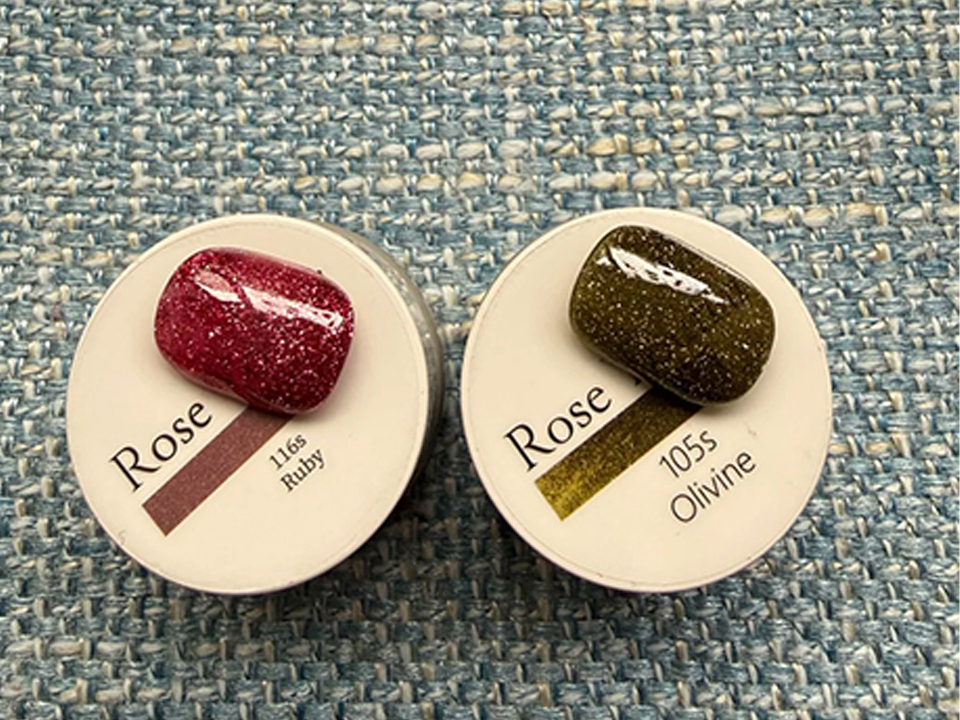
Run the hideous tests.
Not the showroom tests. Not the “it looked fine on my desk” tests. Genuine batch-release testing for radiance gel production need to consist of aesthetic racking up and measurable rheology.
Use this as a beginning structure:
| Test | Recommended Condition | Pass/Fail Signal | Why It Issues |
|---|---|---|---|
| Initial bulk uniformity | Top, center, lower tasting after blending | Radiance matter and shade match across examples | Verifies no kettle-level segregation |
| Heat aging | 40 ° C for 4 weeks | No tough debris, no irreparable splitting up | Imitates storehouse abuse |
| Centrifuge screen | Low-speed laboratory screen, confirmed inside | No compact glitter cake | Quick caution, tentative proof |
| Freeze-thaw | 3 cycles where market-relevant | No clumps, no syneresis | Catches polymer-network weakness |
| Vibration examination | Shipping simulation | No bottom-heavy redistribution | Exposes logistics failure |
| Post-shear recuperation | Rheometer or confirmed viscosity method | Quick rebuild after shear | Forecasts loading and brushing behavior |
| Heal recognition | LED/UV treatment depth check | No under-cured glitter-rich areas | Avoids performance problems |
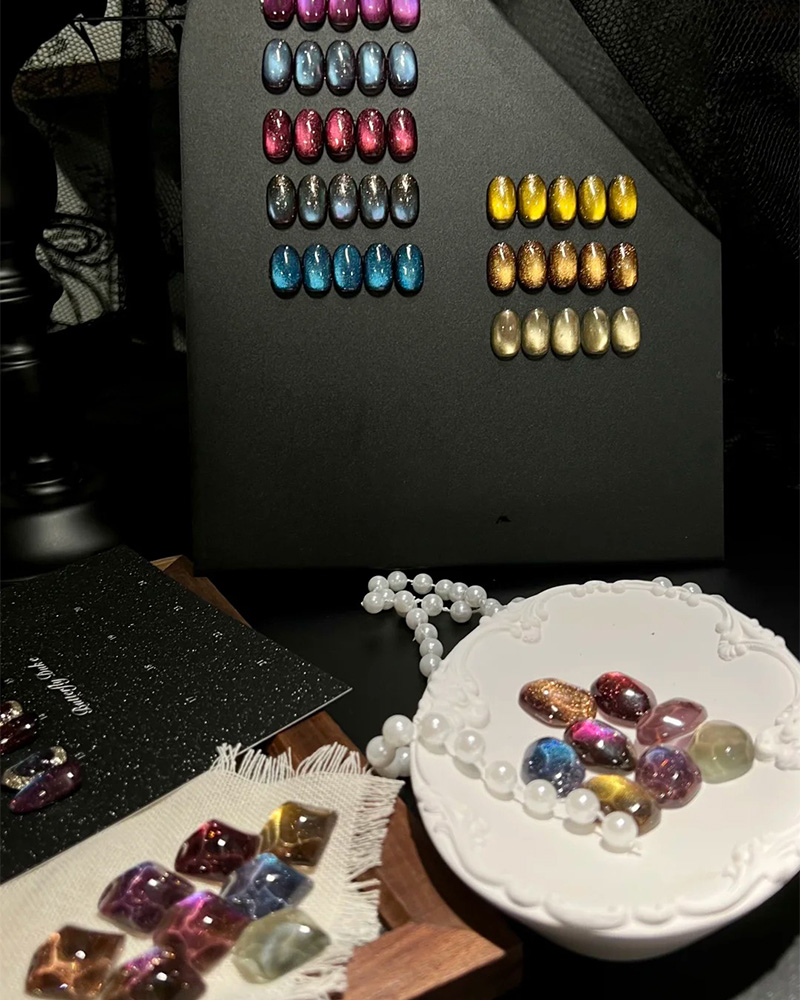
For visual lines such as wine red magnetic pet cat eye gel establishes or opalescent items like star opalescent jelly nail gel polish, stability testing must consist of optical consistency. Magnetic pigment, shimmer, and radiance can each move in a different way. One secure result does not show the whole system is steady.
The least expensive stabilizer frequently sets you back one of the most.
An aesthetic gel stabilizer should hold fragments, preserve clearness, preserve brush feel, avoid graininess, make it through pigment lots, and not conflict with treating. That is a lot to ask from one component.
| Stabilizer Method | Best Usage | Main Benefit | Usual Failing |
|---|---|---|---|
| Acrylates/carbomer-style network | Clear or clear gel systems | Strong yield value and suspension | Can haze, clump, or stop working with inappropriate electrolytes |
| Fumed silica | Anhydrous or resin-rich systems | Great anti-settling and thixotropy | Can create drag, cloudiness, or air retention |
| Organoclay | Non-aqueous gels and coatings | Strong particle suspension | Requirements proper activation and polarity suit |
| Cellulose derivatives | Some cosmetic gels | Smooth structure and thickness construct | May not offer enough yield alone |
| Crossbreed polymer system | High-glitter or multi-effect gels | Equilibriums circulation, clearness, and suspension | Needs more testing and distributor technique |
| Density matching | Heavy shine systems | Minimizes working out stress | Minimal by aesthetic appeals, treatment, and resin compatibility |
Do not choose the stabilizer after the shine. Choose them together.
That is the distinction in between a formula that endures scale-up and a formula that only behaves in a sample container.
You quit radiance from sinking in gel by building a gel connect with adequate return tension, thixotropic recuperation, and bit compatibility to immobilize shine at rest while still permitting smooth circulation during blending, loading, and application without clumping, haze, or inadequate remedy efficiency.
In practice, that implies using the right rheology modifiers for gel, managing glitter size and thickness, verifying post-shear recuperation, and testing top-middle-bottom examples from mass containers. High viscosity alone is insufficient.
Radiance negotiation in bulk gel manufacturing is brought on by a mismatch between particle weight, particle dimension, gel thickness, yield stress and anxiety, blending power, storage temperature, and holding time, permitting glitter to migrate descending before or after loading rather than remaining uniformly put on hold in the gel matrix.
The most common root causes are weak stabilizer systems, extra-large radiance, bad wetting, too much heat throughout handling, over-shearing, under-developed gel structure, and untried scale-up modifications.
The best cosmetic gel stabilizer for radiance suspension is the one that develops dependable return value and quick thixotropic recovery while staying suitable with the gel’s resin, pigment lots, photoinitiator plan, clarity target, cure depth, and last brush feeling.
For many systems, that means a hybrid approach: acrylates or carbomer-type framework for suspension, silica or organoclay for thixotropy where compatible, and carefully managed particle filling instead of one magic additive.
Enhancing viscosity can slow down shine settling in gel, however it does not instantly stop settlement because fragments may still move if the gel lacks yield stress and anxiety, framework recuperation, and proper fragment moistening after production shear, storage space warmth, or shipping resonance.
A thick gel that does not reconstruct after mixing can still separate. A smarter target is managed circulation under shear and solid rest-state suspension.
Suppliers need to examine radiance suspension gel formula via sped up heat aging, resonance, freeze-thaw where appropriate, top-middle-bottom tasting, rheology checks, visual grading, centrifuge screening, and cure-depth recognition to confirm bit circulation continues to be secure from mass storage with final consumer application.
The best evidence originates from production-scale samples, not just lab cups. Always compare the first, middle, and last filled systems from the exact same batch.
Pretty gel is very easy.
Steady radiance gel is design. If you desire fewer problems, less batch arguments, and fewer awful shocks at the end of a jar, quit dealing with radiance as a second thought. Specify the bit. Develop the rheology. Control the mixing order. Test the mass. Then examination it again after heat, resonance, and time.
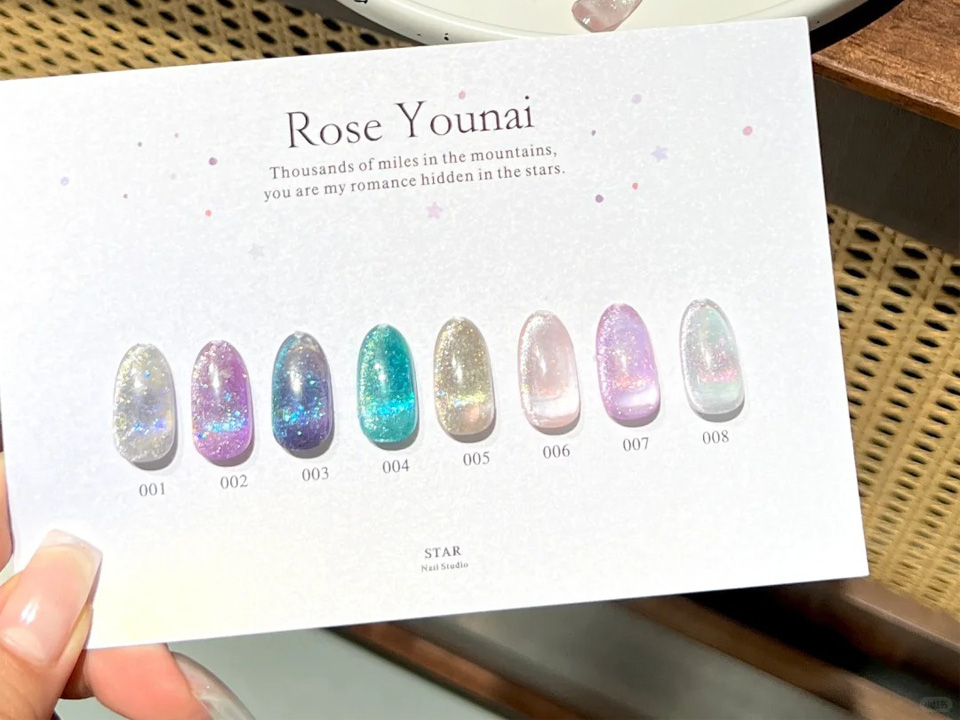
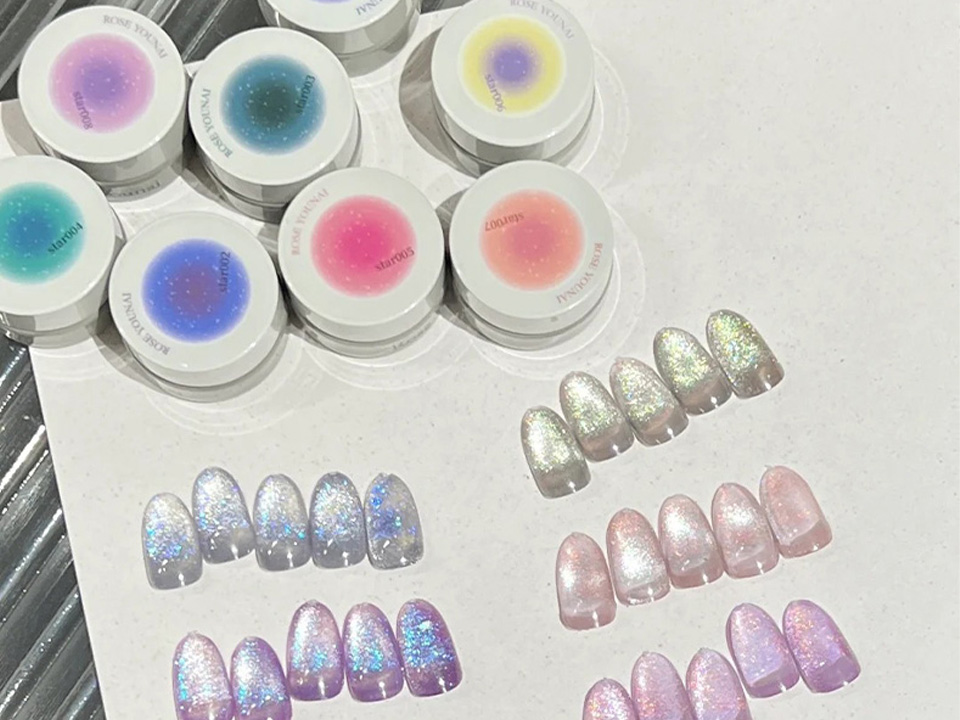
For brand names building sparkle-heavy collections, begin with formulas already created around visual payoff and framework, such as FG Series double-focus mini shine gel, SG Collection large galaxy radiance gel, and Rose Younai celebrity glitter nail gel. The item that looks attire after shipping is the item that gets reordered.